
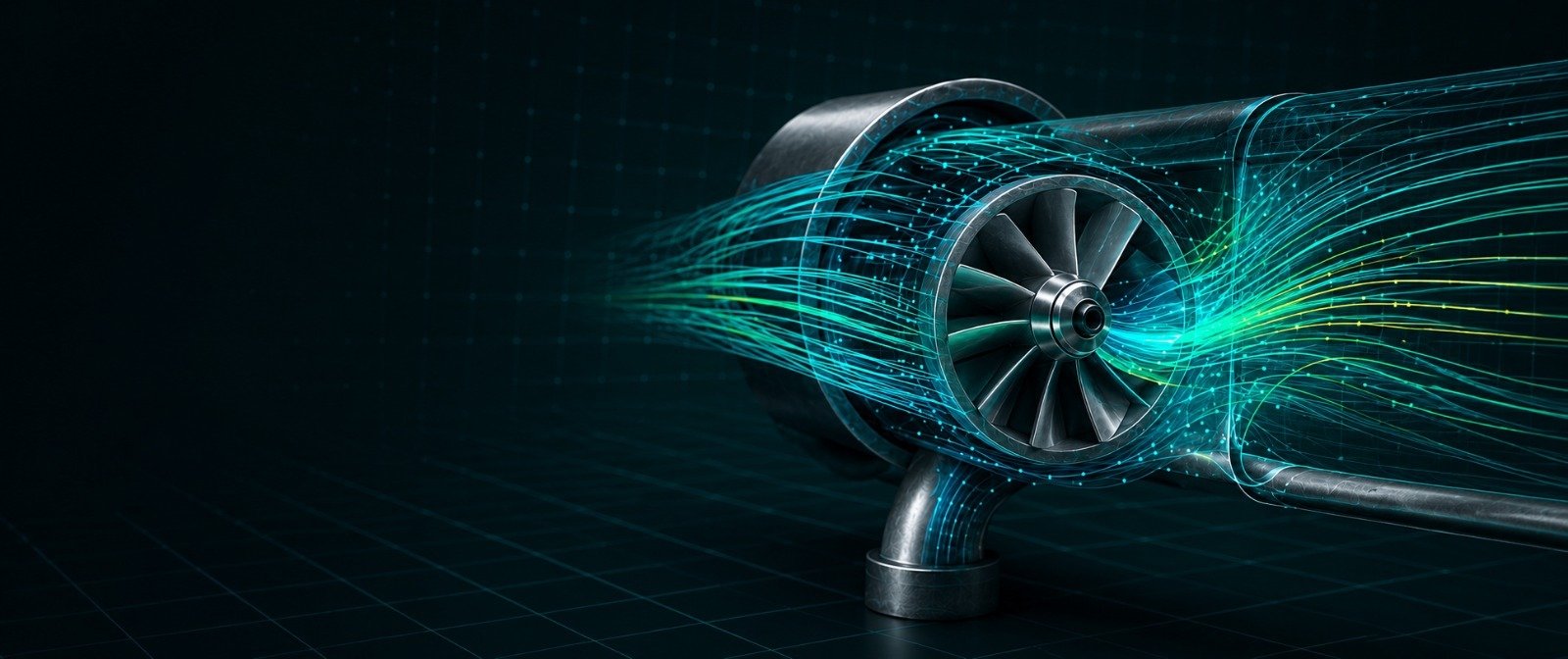
Simulation-Driven Engineering
At AWJ Engineering, our Finite Element Analysis (FEA) service delivers high-fidelity simulation across every major engineering physics domain – mechanical, thermal, chemical, electrical, magnetic, structural, and fluid dynamics – plus full Multiphysics coupling. Whether your challenge involves simple stress checks or complex interactions between electromagnetic fields, fluid flow, heat transfer, chemical reactions, and nonlinear material behavior, we build accurate digital models that reveal real-world performance before any physical prototype is built.
Our multidisciplinary team (structural, thermal, chemical, electrical, and fluid dynamics engineers) goes far beyond conventional solid-mechanics FEA. We routinely solve coupled, transient, and nonlinear problems that most simulation providers treat as “out of scope.” The result: earlier design decisions, fewer costly prototypes, and products that perform reliably under realistic operating conditions.
Finite Element Analysis (FEA)
Simulation-Driven Engineering
At AWJ Engineering, our Finite Element Analysis (FEA) service delivers high-fidelity simulation across every major engineering physics domain – mechanical, thermal, chemical, electrical, magnetic, structural, and fluid dynamics – plus full Multiphysics coupling. Whether your challenge involves simple stress checks or complex interactions between electromagnetic fields, fluid flow, heat transfer, chemical reactions, and nonlinear material behavior, we build accurate digital models that reveal real-world performance before any physical prototype is built. Our multidisciplinary team (structural, thermal, chemical, electrical, and fluid dynamics engineers) goes far beyond conventional solid-mechanics FEA. We routinely solve coupled, transient, and nonlinear problems that most simulation providers treat as “out of scope.” The result: earlier design decisions, fewer costly prototypes, and products that perform reliably under realistic operating conditions.Our FEA Expertise in Practice
Some of our delivered projects are mentioned below:- Coupled transient plastic heat staking
- Design & optimization of pressure vessels
- Hyperelastic deformation of TPU
- Lateral torsional buckling of beams
- ANSYS MAPDL thermal analysis
- Ultrasonic welding simulation
- CO₂ electrolyzer simulation studies (electrochemical + fluid + structural)
- Microneedling drug delivery systems
- Septal cartilage dynamics
- Plasma systems (electromagnetic + fluid + thermal)
- Pipe stress analysis
- Heat transfer in porous electrodes
- High-power application coils for wireless power transfer in electric vehicles (electromagnetic + thermal)
This breadth proves our core strength: we treat FEA as a true Multiphysics platform, not a narrow stress-analysis tool.
Our FEA Expertise in Practice
Some of our delivered projects are mentioned below:
- Coupled transient plastic heat staking
- Design & optimization of pressure vessels
- Hyperelastic deformation of TPU
- Lateral torsional buckling of beams
- ANSYS MAPDL thermal analysis
- Ultrasonic welding simulation
- Heat transfer in porous electrodes
- High-power application coils for wireless power transfer in electric vehicles (electromagnetic + thermal)
- Microneedling drug delivery systems
- Septal cartilage dynamics
- Plasma systems (electromagnetic + fluid + thermal)
- Pipe stress analysis
- CO₂ electrolyzer simulation studies (electrochemical + fluid + structural)
This breadth proves our core strength: we treat FEA as a true Multiphysics platform, not a narrow stress-analysis tool.
What Problems FEA Solves
Engineering teams repeatedly ask the same critical questions:Will this structure withstand mechanical loads, pressure, or fatigue?
Yes, our FEA accurately predicts stress, deformation, and fatigue life under real mechanical loads and pressure conditions.
How will temperature gradients or thermal expansion affect performance?
How will chemical reactions, species transport, or electrochemical processes influence the system?
Our Multiphysics FEA models chemical reactions and electrochemical effects to accurately predict system behavior.
Will electrical currents or magnetic fields generate unwanted forces, heating, or interference?
We evaluate electromagnetic forces, Joule heating, and interference to eliminate unwanted electrical and magnetic issues.
How do fluids interact with solid structures (FSI)?
Full fluid-structure interaction simulations reveal dynamic coupling between fluids and solids under operating conditions.
Where are the hidden weaknesses in Multiphysics environments?
Can the design be optimized without increasing weight, cost, or failure risk?
Our FEA answers all of these – and many more – by discretizing complex geometries into finite elements and solving the governing equations for mechanical, thermal, chemical, electrical, magnetic, structural, and fluid physics simultaneously.
What Problems FEA Solves
Engineering teams repeatedly ask the same critical questions:
Will this structure withstand mechanical loads, pressure, or fatigue?
How will temperature gradients or thermal expansion affect performance?
How will chemical reactions, species transport, or electrochemical processes influence the system?
Our Multiphysics FEA models chemical reactions and electrochemical effects to accurately predict system behavior.
Will electrical currents or magnetic fields generate unwanted forces, heating, or interference?
We evaluate electromagnetic forces, Joule heating, and interference to eliminate unwanted electrical and magnetic issues.
How do fluids interact with solid structures (FSI)?
Full fluid-structure interaction simulations reveal dynamic coupling between fluids and solids under operating conditions.
Where are the hidden weaknesses in Multiphysics environments?
Can the design be optimized without increasing weight, cost, or failure risk?
Our FEA answers all of these – and many more – by discretizing complex geometries into finite elements and solving the governing equations for mechanical, thermal, chemical, electrical, magnetic, structural, and fluid physics simultaneously.
Technical Capabilities
We provide complete coverage across all domains:
Structural & Mechanical Analysis
Static/dynamic loads, stress/strain, deformation, buckling, contact, fatigue life, and lifecycle prediction.
Thermal Analysis
Steady-state and transient heat transfer, thermal expansion, electronic cooling, energy systems, and heat-driven mechanical behavior.
Fluid Dynamics & Fluid-Structure Interaction (FSI)
Flow-induced loads, pressure distribution, and full two-way coupling between fluids and solids.
Nonlinear Simulations
Material nonlinearity, geometric nonlinearity, plastic deformation, hyperelasticity, contact, and hardening.
Chemical Analysis
Reaction kinetics, species transport, electrochemical processes, mass transfer, and coupled chemo-mechanical or chemo-thermal effects.
Electrical Analysis
Current flow, Joule heating, electrical conductivity, and coupled electro-thermal effects.
Magnetic Analysis
Electromagnetic fields, magnetic forces, induction, wireless power transfer coils, and magneto-structural coupling.
Multiphysics Simulation
Any combination of the above (e.g., thermo-mechanical-chemical-electrical-magnetic-fluid) in a single integrated model.
Engineering Workflow
Problem Definition
Clarify objectives, operating conditions, and performance targets.
Model Development
CAD import, high-quality meshing, material properties, boundary conditions.
Simulation & Analysis
Solve across all relevant physics domains.
Design Optimization
Iterate geometry, materials, or loading for performance gains.
Validation & Reporting
Detailed contour plots, animations, quantitative results, and clear engineering recommendations.
Engineering Workflow
Problem Definition
Clarify objectives, operating conditions, and performance targets.Model Development
CAD import, high-quality meshing, material properties, boundary conditions.
Simulation & Analysis
Solve across all relevant physics domains.Design Optimization
Iterate geometry, materials, or loading for performance gains.Validation & Reporting
Detailed contour plots, animations, quantitative results, and clear engineering recommendations.Tools & Technologies
ANSYS, COMSOL Multiphysics, Simcenter CCM+, OPENFOAM, SolidWorks, MATLAB, and Python-based scientific computing – chosen for their ability to handle true Multiphysics coupling at industrial and research-grade accuracy.Tools & Technologies
ANSYS, COMSOL Multiphysics, Simcenter CCM+, OPENFOAM, SolidWorks, MATLAB, and Python-based scientific computing – chosen for their ability to handle true Multiphysics coupling at industrial and research-grade accuracy.
Industries We Support
Why Choose AWJ Engineering for FEA
- True Multiphysics expertise across mechanical, thermal, chemical, electrical, magnetic, structural, and fluid domains
- Real project experience with nonlinear, transient, and coupled phenomena
- Simulation used as a decision-making tool – not just for generating plots
- Reduced development costs and accelerated timelines by catching issues early
- Research-grade rigor combined with practical engineering insight
Why Choose AWJ Engineering for FEA
- True Multiphysics expertise across mechanical, thermal, chemical, electrical, magnetic, structural, and fluid domains
- Real project experience with nonlinear, transient, and coupled phenomena
- Simulation used as a decision-making tool – not just for generating plots
- Reduced development costs and accelerated timelines by catching issues early
- Research-grade rigor combined with practical engineering insight
Why Choose AWJ Engineering for FEA
Validate Your Design Before It Becomes a Costly Problem
If your product or system involves any combination of mechanical loads, thermal effects, chemical reactions, electrical currents, magnetic fields, fluid flow, or structural behavior, AWJ Engineering can deliver the definitive answers you need. Contact us today to discuss your FEA requirements – whether the challenge is conventional or highly coupled and non-standard. Let’s turn simulation into your competitive advantageRelated Services
Computational Fluid Dynamics (CFD)
Numerical simulation of fluid flow using Navier–Stokes equations, including turbulence modeling, multiphase flow, heat transfer, and pressure–velocity coupling.
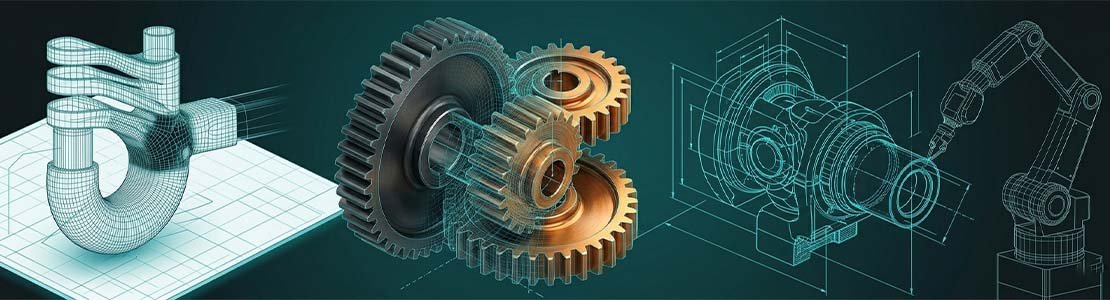
3D CAD Modeling
Parametric 3D modeling of parts and assemblies with design intent, feature-based architecture, and optimization for manufacturability and simulation readiness.
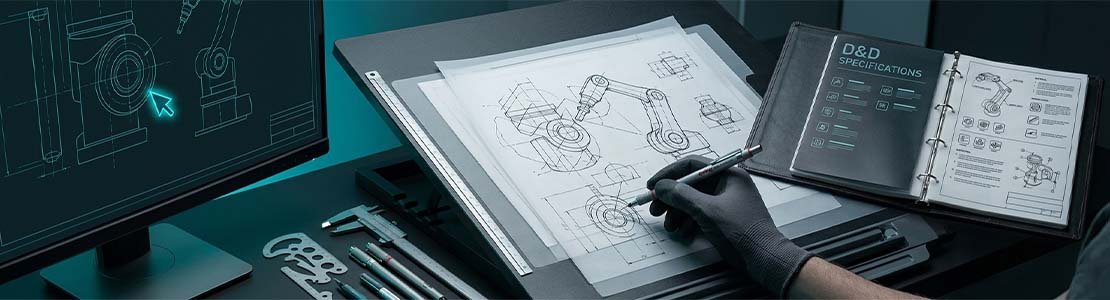
Engineering Drawings & Documentation
Standards-compliant technical drawings with GD&T, tolerancing schemes, BOM structuring, and production-ready documentation aligned with ISO/ASME practices.
Validate Your Design Before It Becomes a Costly Problem
If your product or system involves any combination of mechanical loads, thermal effects, chemical reactions, electrical currents, magnetic fields, fluid flow, or structural behavior, AWJ Engineering can deliver the definitive answers you need.
Contact us today to discuss your FEA requirements – whether the challenge is conventional or highly coupled and non-standard. Let’s turn simulation into your competitive advantage