Membrane Dehumidification
INDUSTRY
Environmental Control/ HVAC Engineering
CLIENT TYPE
Engineering organization developing humidity control systems
SERVICE PROVIDED
Multiphysics simulation and performance evaluation
OBJECTIVE
Analyze humidity distribution and evaluate design improvements for a membrane-based dehumidification system
ENGINEERING METHOD
Multiphysics modeling of airflow and moisture transport
SOFTWARE TOOLS
COMSOL Multiphysics
SIMULATION FOCUS
Turbulent airflow behavior, moisture transport, and system performance optimization
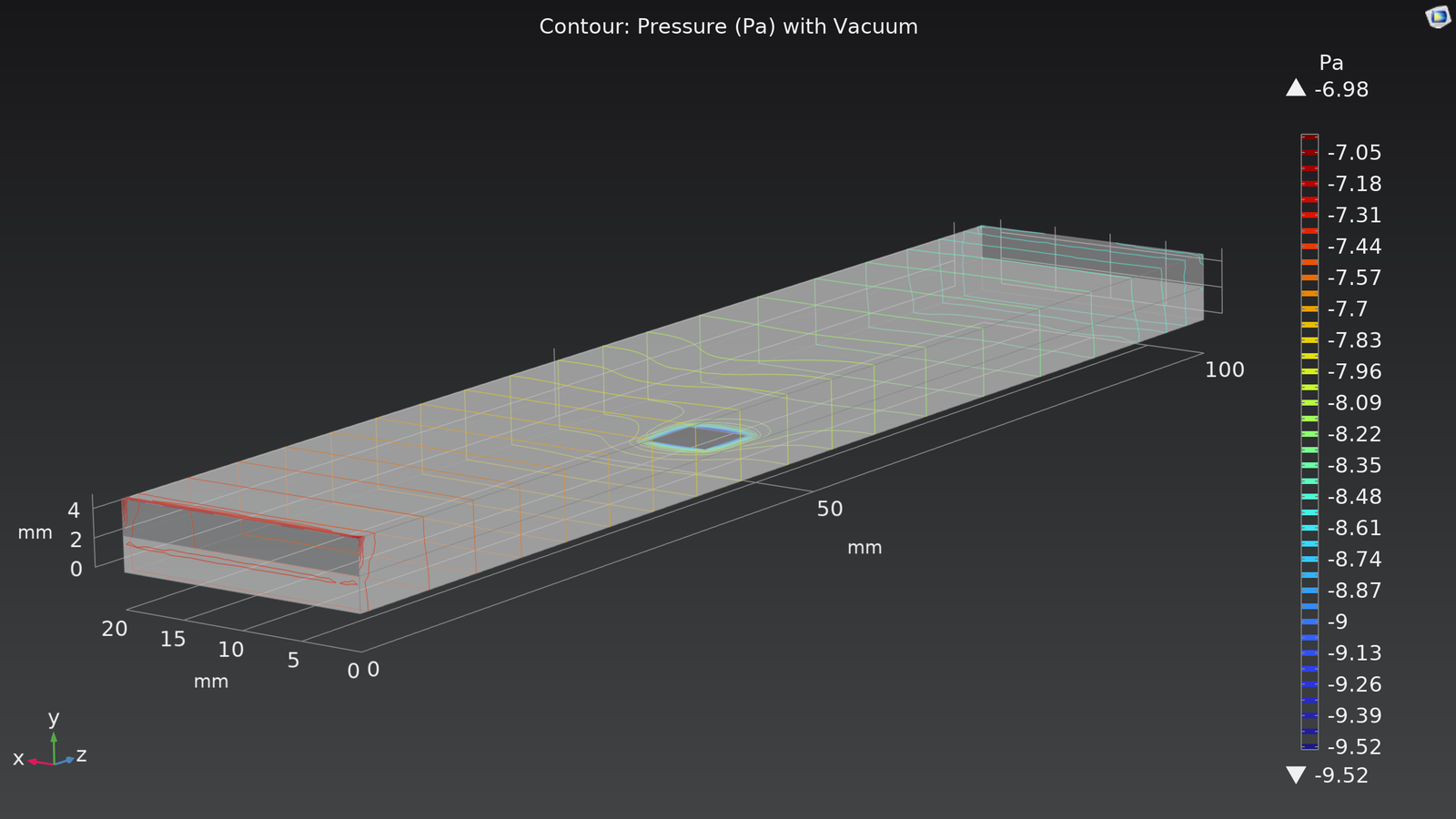
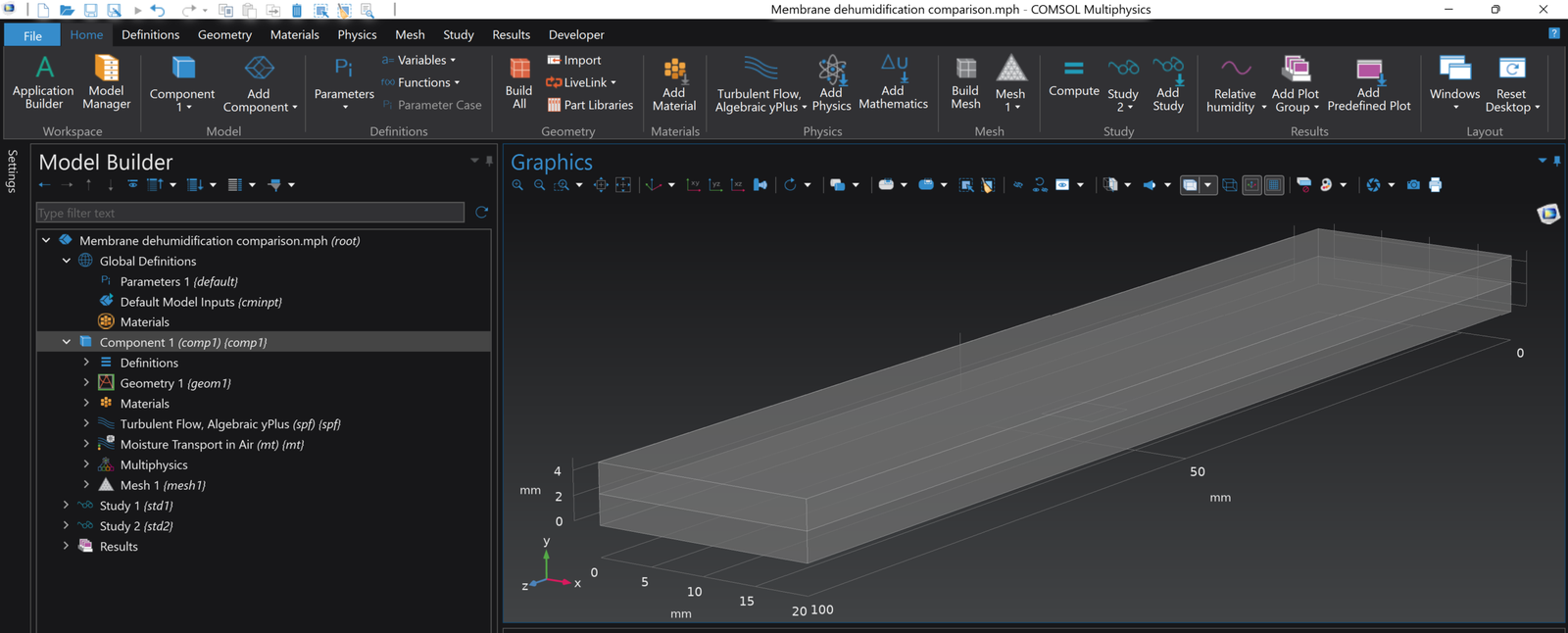
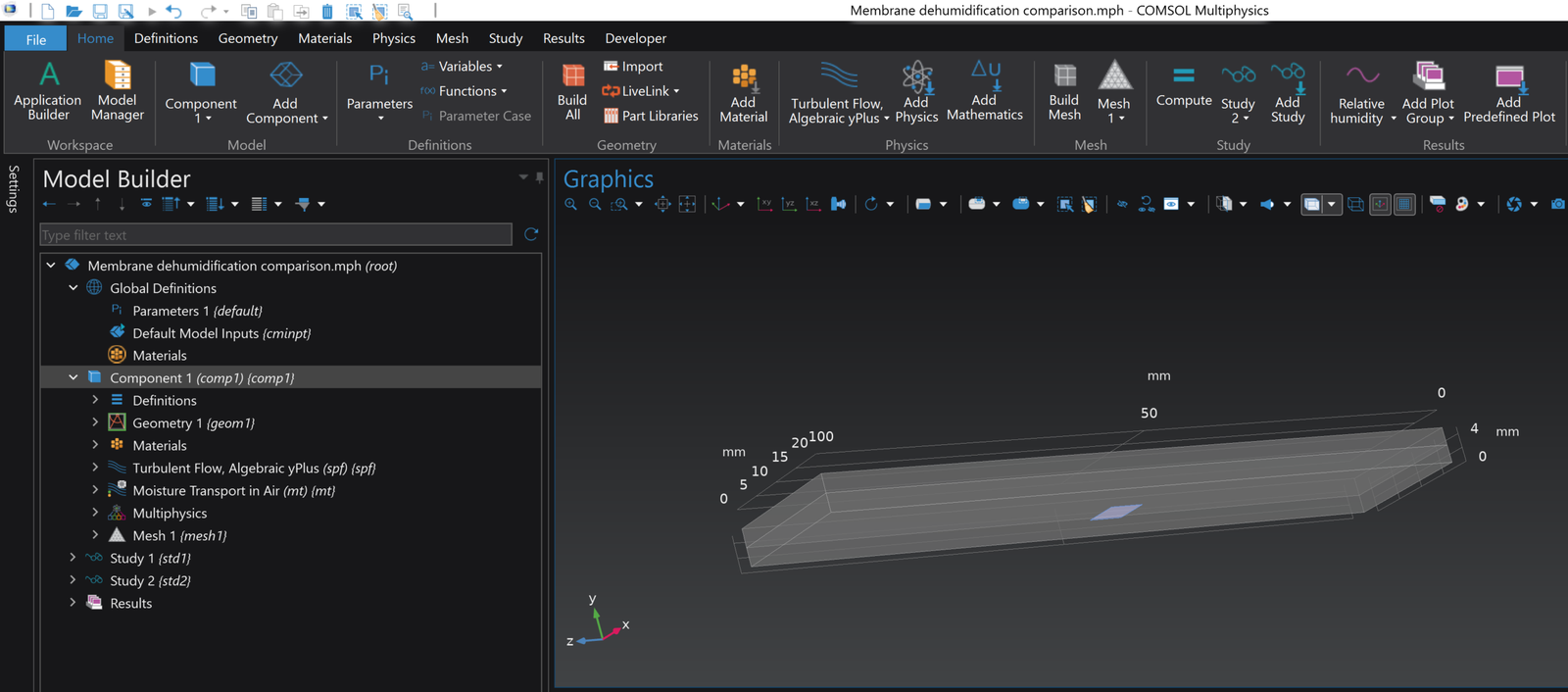
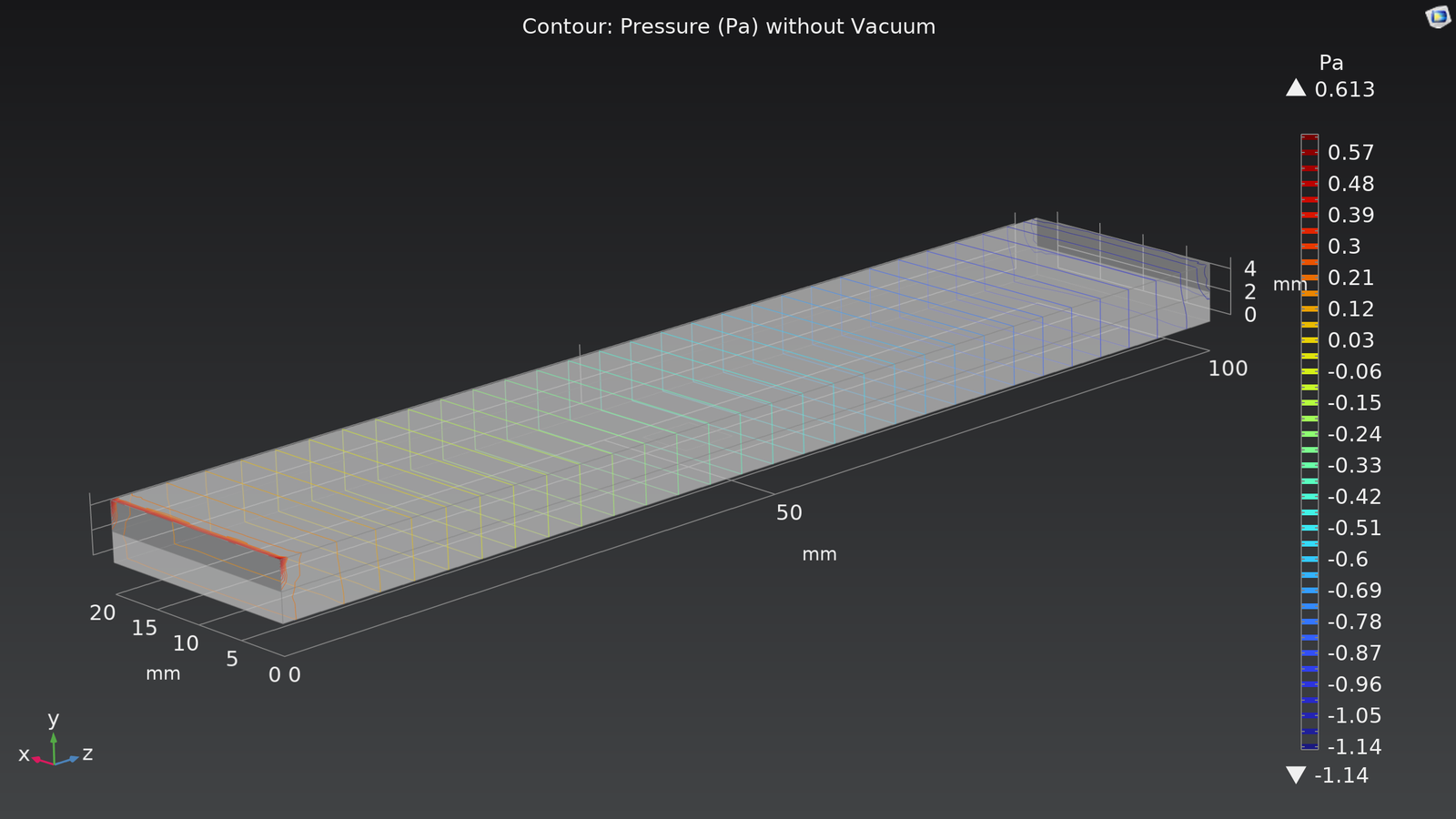
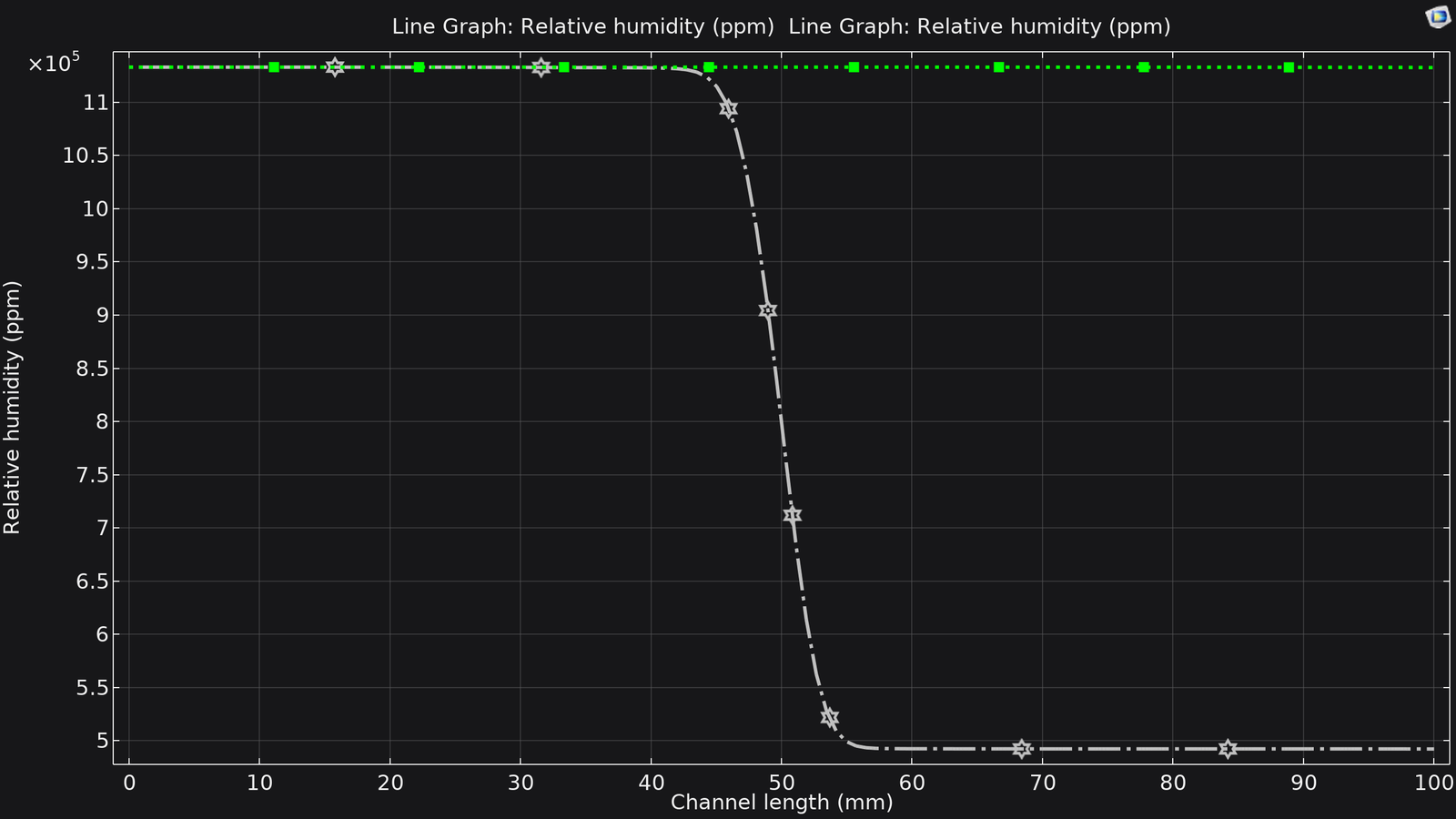
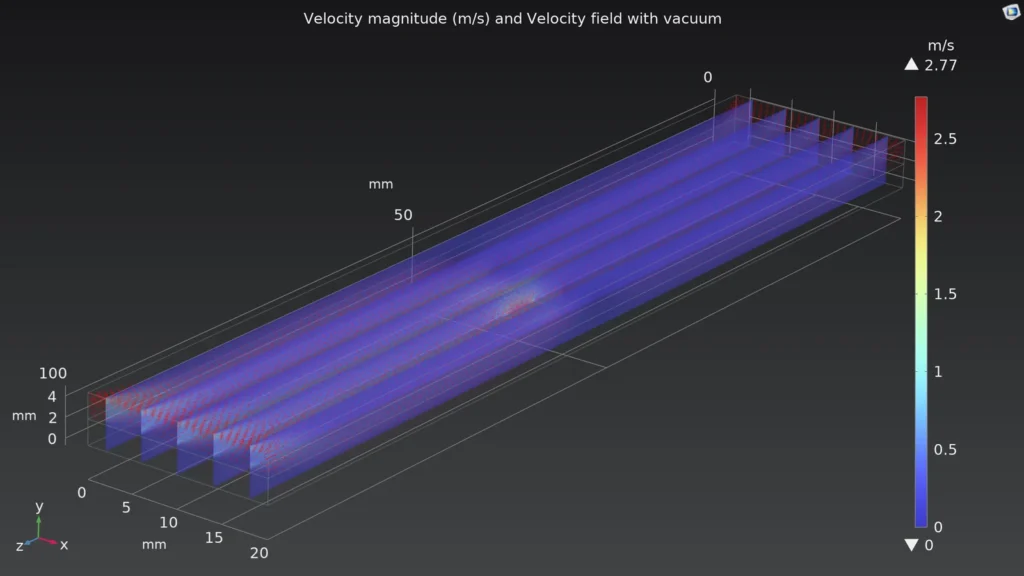
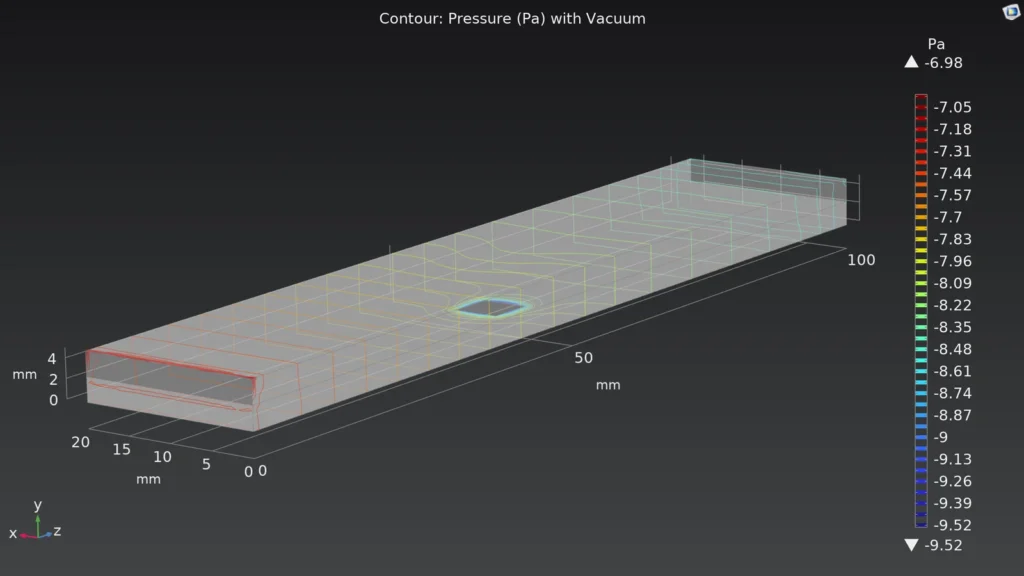
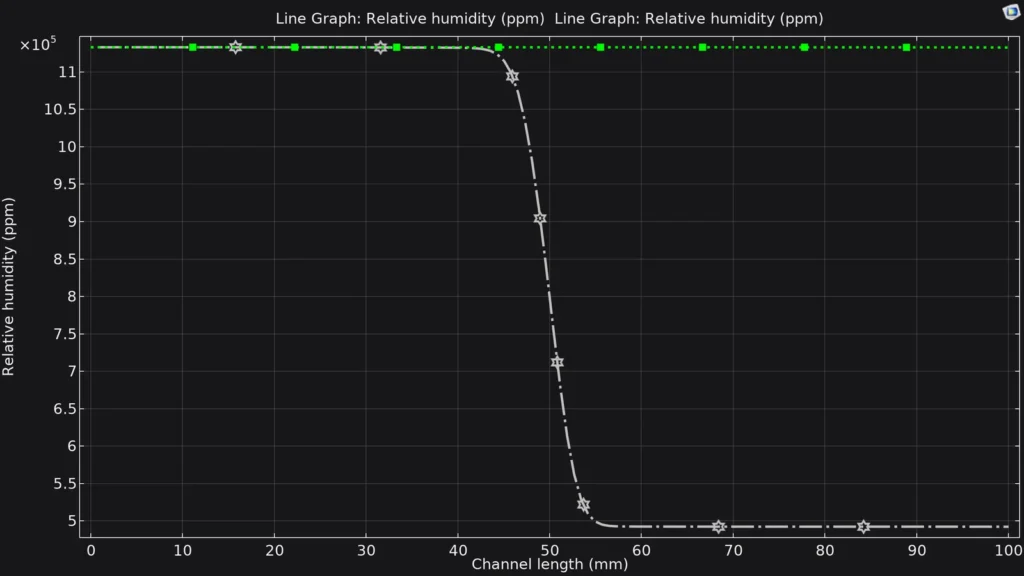
At AWJ Engineering, our team analyzed an existing 3D model, featuring two rectangular bodies divided by a membrane, to evaluate humidity distribution relative to structure length. We assessed feasibility through two variations: Variation 1 with an inlet and outlet in the top section, and Variation 2 adding a vacuum pump at the bottom. This comparison highlighted modifications for enhanced performance.
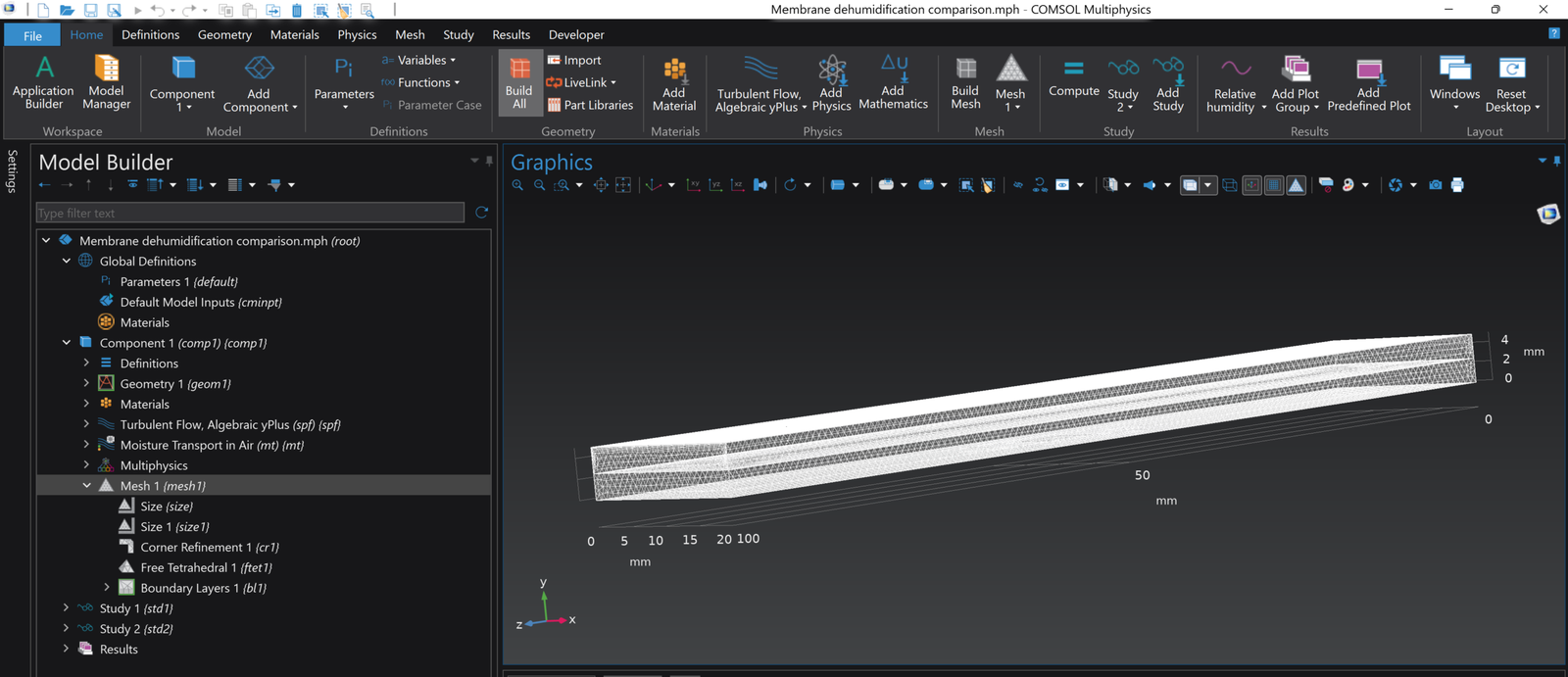
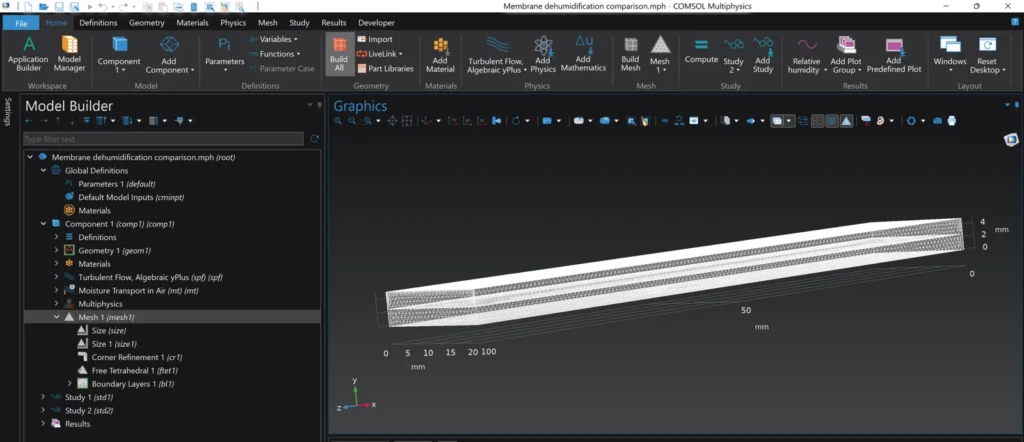
Utilizing COMSOL, we modeled turbulent fluid flow with Algebraic yPlus physics and Wall Distance Initialization, while simulating moisture content via Moisture Transport in Air. The fully coupled approach addressed grid-dependent challenges, ensuring accurate, reliable results.
This project illustrates our expertise in multiphysics simulations for optimized environmental control.
For more on boundary conditions, solver settings, or similar studies, contact us toda.
The Client
The client was developing a membrane-based dehumidification system designed to regulate humidity levels within a controlled airflow environment. Membrane dehumidification technologies are increasingly used in applications such as:- HVAC and environmental control systems
- industrial drying processes
- climate-controlled storage facilities
- energy-efficient humidity management solutions
The Challenge
Dehumidification performance in membrane-based systems depends on several interacting factors, including:
- airflow patterns inside the system
- membrane positioning and surface interaction
- moisture transport mechanisms
- pressure differences across the membrane
The client needed to determine whether modifications to the system configuration could improve humidity removal performance.
Specifically, the engineering team needed to understand:
- how humidity distribution changes along the length of the structure
- how airflow configuration affects moisture transport
- whether additional pressure control mechanisms could improve system efficiency
Without detailed simulation, evaluating these variables would require multiple costly physical prototypes and extensive experimental testing.
The client therefore sought a computational simulation approach that could provide reliable insights into system behavior.
Engineering Challenge
Modeling membrane-based dehumidification systems involves complex interactions between fluid flow and mass transport processes.
The engineering challenge included:
- simulating turbulent airflow within the system geometry
- modeling moisture diffusion and transport through the air domain
- ensuring stable numerical behavior within the simulation grid
- accurately representing the interaction between airflow and the membrane surface
Because both airflow dynamics and moisture transport influence the system simultaneously, the simulation required a fully coupled Multiphysics modeling approach.
Maintaining numerical stability and grid-independent results was also critical to ensuring accurate analysis.
Our Approach
AWJ Engineering implemented a structured Multiphysics simulation workflow to evaluate the system and explore potential design improvements.Existing Model Analysis
The project began with analysis of an existing 3D system model provided by the client.
The model consisted of two rectangular airflow chambers separated by a membrane, allowing moisture transport between the regions.
Our objective was to study how humidity levels varied across the system and how structural changes might improve performance.
Design Variations
To evaluate potential improvements, two system configurations were analyzed.
Variation 1:
The base design included an inlet and outlet positioned in the top section of the structure.
Variation 2:
The second configuration introduced a vacuum pump at the lower section of the system, creating a pressure-driven mechanism to enhance moisture extraction.
Comparing these two configurations allowed the team to evaluate how pressure control and airflow modifications influence humidity removal efficiency.
Multiphysics Simulation Setup
The system was modeled in COMSOL Multiphysics, allowing simultaneous simulation of fluid flow and moisture transport.
Key physics models implemented included:
- turbulent airflow modeling using Algebraic y+ physics
- Wall Distance Initialization for accurate boundary layer representation
- moisture transport in air to simulate humidity behavior
Fully Coupled Simulation
Because airflow behavior directly influences moisture transport, the simulation was solved using a fully coupled numerical approach.
This ensured accurate interaction between:
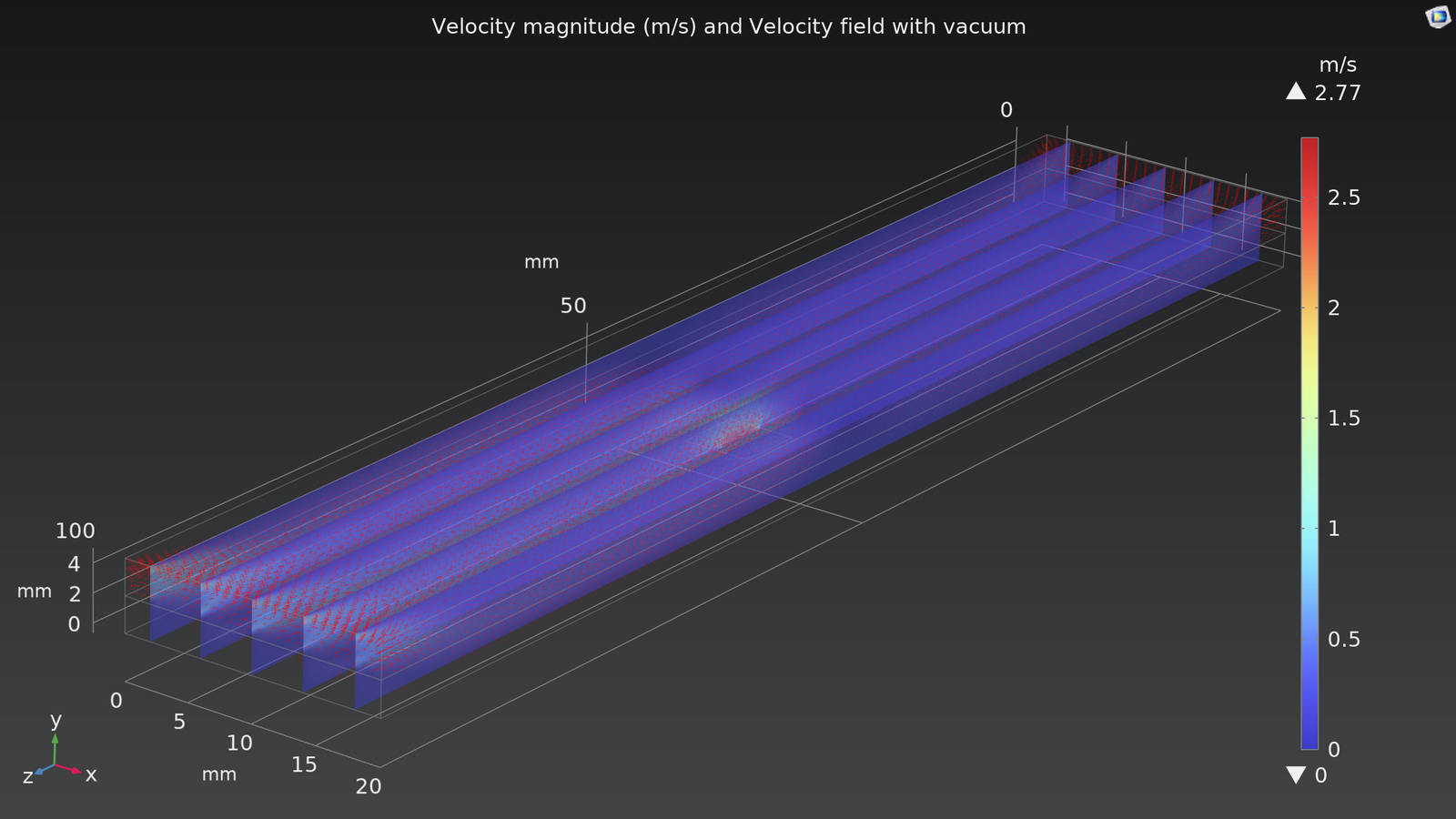
- airflow velocity fields
- moisture diffusion and convection
- pressure gradients within the system
Special attention was given to addressing grid-dependent challenges, ensuring the simulation results remained stable and reliable across the computational mesh.
The Solution
Through Multiphysics modeling, AWJ Engineering produced a detailed simulation of the membrane dehumidification system.
The analysis enabled the engineering team to examine:
- humidity distribution along the system length
- airflow behavior in each chamber
- the effect of pressure-driven extraction mechanisms
- performance differences between the two design configurations
By comparing the base design with the vacuum-assisted variation, the simulation revealed how structural modifications can improve the system’s moisture removal efficiency and airflow control.
These insights provide valuable guidance for optimizing future membrane dehumidification system designs.
Technologies Used
Multiphysics Modeling: Electrostatic, Fluid Dynamics and PDE Module coupling
Numerical Methods: Finite Element Analysis (FEA), Computational Fluid Dynamics (CFD)
Simulation Focus: Electrohydrodynamic airflow modeling, Ion transport dynamics, Momentum exchange between ions and gas molecules
Validation Method: Benchmark comparison with established electrohydrodynamic research
Technologies Used
Multiphysics Simulation Platform
COMSOL Multiphysics
Fluid Dynamics Modeling
Turbulent airflow simulation using Algebraic y+ physics
Boundary Modeling
Wall Distance Initialization
Mass Transport Modeling
Moisture Transport in Air
Numerical Approach
Fully coupled Multiphysics solver
Results & Business Impact
The simulation delivered critical insights into how system configuration affects dehumidification performance.
Key outcomes included:
- A detailed visualization of the humidity distribution within the system
- Comparison of airflow patterns between design configurations
- Evaluation of vacuum-assisted moisture extraction performance
- identification of design modifications that improve humidity control
- A reliable Multiphysics simulation framework for future system development
By leveraging simulation-driven analysis, the client was able to evaluate system improvements without extensive physical testing, thereby accelerating the design optimization process.
Key Takeaways
This project highlights AWJ Engineering’s ability to deliver advanced Multiphysics simulations for environmental control systems.
Our engineering expertise allows clients to:
- analyze complex interactions between airflow and mass transport
- optimize humidity control technologies
- evaluate system design improvements before prototyping
- reduce development time and engineering risk
Through simulation-driven engineering, we help organizations develop more efficient, reliable environmental control solutions.
Need Simulation Support for Environmental Control Systems?
If you are developing HVAC systems, dehumidification technologies, or advanced environmental control solutions, AWJ Engineering can help you analyze and optimize system performance through Multiphysics simulation. Contact us today to discuss your project.Related Projects
Hyperelastic Material Analysis of Thermoplastic Polyurethane
Evaluate deformation and stress behavior of Thermoplastic Polyurethane (TPU) under applied load.
Transient Fluid-Structure Interaction (FSI) in Collapsible Elastic Tube
Analyze how fluid flow interacts with the deformation of a thin-walled elastic tube.
Structural Integrity Analysis of Concrete - Steel Strut Joint
Validate structural stability of a concrete-steel strut joint without bolt reinforcement.
Multiphysics Simulation of Coal Powder Press Machine
Integrated structural, thermal, and compaction simulation of coal powder press systems.
Hyperelastic Material Analysis of Thermoplastic Polyurethane (TPU)
Advanced nonlinear hyperelastic modeling of thermoplastic polyurethane under large deformation.

Enhancing the Thermal Efficiency of a Parabolic Trough Collector Using Inserts
Improving solar collector efficiency using internal inserts for enhanced heat transfer.